




Three Months Postpartum Update
As a pediatric dietitian and IBCLC, I love sharing realistic postpartum updates, infant feeding insights, and evidence-based breastfeeding information through each stage of motherhood. I recently welcomed my third baby, and these monthly recaps have become such a sweet way to document her milestones while also helping other moms navigate the newborn season.
Disclaimer: Some of the products linked in this post may be Amazon affiliate links, meaning I may receive a small commission if you purchase through my link at no additional cost to you.
Clara is finally awake.
We have officially moved beyond the super sleepy newborn phase and into the stage where she is much more alert, interactive, and aware of the world around her. She has significantly longer wake windows during the day and spends so much more time smiling, cooing, and engaging with everyone around her.
Honestly, I expected this stage to feel more overwhelming, but it really hasn’t. She has such a calm temperament and is easily entertained by her brothers talking to her, sitting outside in the wind, watching the ceiling fan, or relaxing in her favorite Graco swing while I cook.
She is still very much our “go-with-the-flow” baby. With three kids, there really isn’t a strict daily schedule, and she has adapted beautifully to being along for the ride. Most days she naps in a bassinet nearby, in the carrier while we’re out, or next to me while I work.
At this point, she basically lives in the WildBird Ariel Carrier, and I truly don’t know what I’ll do when she outgrows it because it has been one of my favorite postpartum products this time around. It’s incredibly supportive, comfortable, and doesn’t aggravate my back at all.
Three Month Sleep Schedule & Night Wakings
Her nighttime sleep has stayed relatively stable so far, although we are still waiting to see if the famous 3-month sleep regression makes an appearance.
Currently, our nights typically look like this:
- Bedtime around 9:30 PM
- First wake around 1–2 AM to nurse
- Second wake around 4–5 AM
- Up for the day around 7 AM
Interestingly, her sleepiest hours are still in the morning. She naps most consistently earlier in the day and then becomes much more alert and social by the afternoon. We are still using the kyte baby sleep sack with her arms out and it is working well for us – we have three on hand now because she can’t sleep without it!
We still are not following a strict nap schedule, which honestly feels realistic for this season of life. Between school pickups, activities, work, and older siblings, flexibility has been far more sustainable for us than trying to force a rigid routine.
Breastfeeding at Three Months Postpartum
Breastfeeding is continuing to go really well overall.
She is currently around 13 pounds and still nurses approximately 10–12 times per day, which is absolutely normal for a breastfed baby at this age despite what social media or sleep training culture may sometimes suggest. Link to our sleep and nutrition blog post here. She just graduated to 3-6 month clothes and I am loving having so many more options of clothing for her as she grows!
One thing I always remind parents as both a pediatric dietitian and IBCLC is that feeding frequency alone does not determine whether breastfeeding is going well. What matters most is:
- Consistent weight gain
- Appropriate diaper output
- Baby appearing satisfied after feeds
- Overall growth and development
Some babies naturally continue feeding very frequently, especially during growth spurts or developmental leaps.
Iron Needs During Infancy & Why Maternal Iron Status Matters
One thing we have been especially mindful of with Clara is her iron status.
Because she was born early and I had very low iron levels during pregnancy, we discussed her risk factors with our pediatrician and ultimately decided to offer an iron supplement every other day. As she gets older, we will continue reassessing her needs through labs and growth monitoring.
As both a pediatric dietitian and IBCLC, I think it’s incredibly important for parents to understand just how essential iron is during both pregnancy and infancy.
Iron deficiency is actually the most common micronutrient deficiency worldwide and disproportionately affects pregnant women and young children. During pregnancy, iron requirements increase significantly to support maternal blood volume expansion, placental development, and fetal growth.
Research continues to show that adequate maternal iron stores are extremely important for both pregnancy outcomes and infant development.
Babies born to mothers with iron deficiency during pregnancy may have lower iron stores at birth, especially if they are born prematurely. In fact, approximately 80% of the iron accumulated by a full-term infant occurs during the third trimester of pregnancy. Infants born early miss part of this critical period of iron accretion, placing them at higher risk for iron deficiency during infancy.
Additional maternal conditions such as anemia, hypertension with intrauterine growth restriction, diabetes during pregnancy, or low birth weight can also contribute to lower fetal iron stores.
The American Academy of Pediatrics (AAP) recommends discussing iron supplementation with your pediatrician if your infant has certain risk factors, including:
- Prematurity
- Low birth weight
- Very low birth weight
- Maternal iron deficiency during pregnancy
Iron plays a critical role in:
- Brain development
- Neurological function
- Myelination
- Cognitive development
- Immune health
- Oxygen transport
Research has linked both prenatal and postnatal iron deficiency with adverse neurodevelopmental outcomes in children, emphasizing how important early iron status truly is.
One thing I always want parents to remember is that supplementation decisions should never be one-size-fits-all. Every infant’s medical history, feeding pattern, growth trajectory, and risk factors matter when determining iron needs.
If your baby is approaching six months and beginning solids soon, iron becomes an especially important nutrient to pay attention to during complementary feeding.
Clara is doing really well taking bottles every other day so we can administer her iron supplement. She typically only takes about 2–3 ounces by bottle at a time, although I know she transfers more milk directly at the breast.
You can find out more information about iron needs in infancy in our full blog post here:
Developmental Milestones at 3 Months
This month has brought so many fun developmental changes.
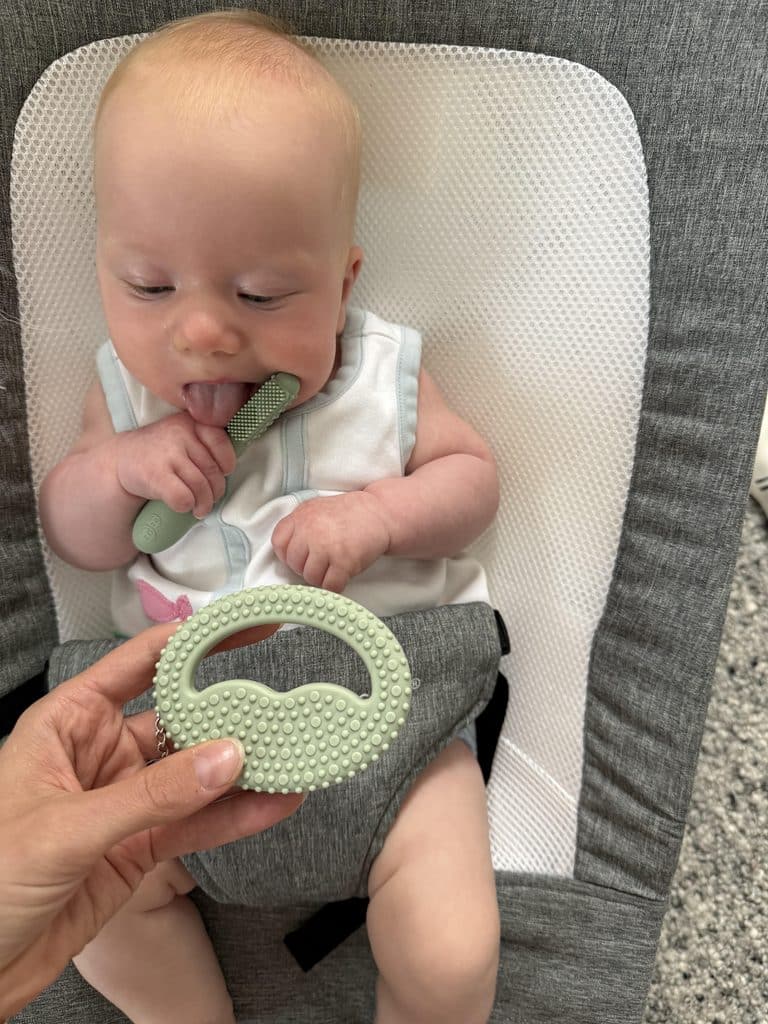
Her head and neck control are now incredibly strong, and she spends a lot more time trying to interact with the world around her. She loves sucking on her hands, attempting to grab nearby objects, and watching everyone around her move through the house.
One of the coolest things I’ve noticed recently is that she has started pressing on my breast while nursing to stimulate let-down. Babies are truly amazing and so intuitive in how they interact with feeding.
She has also started exploring rolling. She rolled from belly to back one time, although I’m still not convinced it wasn’t accidental because she hasn’t repeated it since.
At night, she moves constantly in her bassinet. Some mornings we find her almost completely turned around from where we originally laid her down.
Current favorite activities include:
- Watching her brothers play
- Listening to people talk to her
- Sitting outside
- Being worn in the carrier
- Looking at ceiling fans
- Sucking on her hands
- Tummy time
She is incredibly social and already very aware of who is in the room with her. She especially prefers me holding her and definitely lets everyone know when she feels ignored.
The Car Seat Situation…
We have also entered a new phase: she absolutely hates the car seat.
And honestly? Taking her anywhere lately has felt a little chaotic.
We have tried just about everything to help her tolerate car rides better, but so far nothing has worked consistently. We’re hoping this is simply a temporary phase because right now even short drives can become pretty stressful.
Thankfully, she still does wonderfully once we actually arrive somewhere. It’s just the getting there part that’s challenging at the moment.
Postpartum Reflections at Three Months
Three months postpartum feels like a major turning point.
The fog of the immediate newborn phase has lifted, breastfeeding feels much more intuitive, and her little personality is becoming more obvious every single day.
While postpartum life with three kids is definitely busy and sometimes chaotic, it has also felt slower and calmer in many ways than I expected. A huge part of that is simply letting go of unrealistic expectations and embracing flexibility.
If there’s one thing I hope other moms take away from these updates, it’s this:
You do not need a perfect schedule, perfect sleep habits, or perfect feeding routine to have a thriving baby.
Responsive feeding, connection, flexibility, and trusting your instincts truly go such a long way during infancy.
Want more? My course is a 100% evidence-based approach to starting solids in a way that encourages a healthy dietary pattern from the start.
Check out the Starting Solids 101 Course now!

Cinthia Scott is a Registered Dietitian (RD) and International Board Certified Lactation Consultant (IBCLC) with over 10 years experience in the field of dietetics. Cinthia focuses on ensuring optimal nutrition in the first 1000 days of life to ensure optimal growth and development as well as set the stage for long-term health. Cindy is an author, starting solids expert, and advocate for caregivers receiving evidence based education and support surrounding breastfeeding and starting solids.
Cinthia is co-author of the 101beforeone Starting Solids Book, “101beforeone -baby-led feeding cookbook,” and is the founder and owner of The Baby Dietitian LLC which is her private practice built to provide virtual 1:1 services for caregivers surrounding infant nutrition, toddler nutrition, and breastfeeding support. Cinthia is also the creator of the Starting Solids 101 Program which provides caregivers 1:1 support from a Pediatric Dietitian on how to provide optimal nutrition from the start and create healthy eating habits that will last their whole lifetime. To work with Cinthia, you can access her services here.
Cinthia provides tons of free information for parents on her social media accounts as well.
- Instagram: @The.Baby.Dietitian
- Tiktok: @The.Baby.Dietitian