
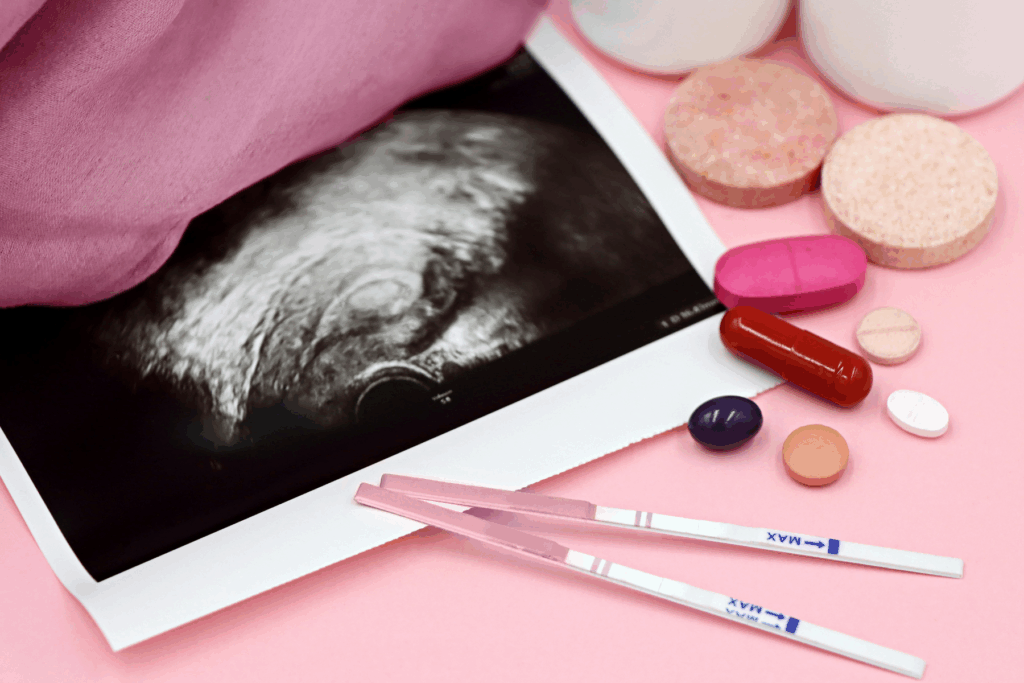


My Fertility and TTC Journey for My Third Pregnancy
One of the most common questions I have received since sharing the news that we are pregnant with baby #3 is “Did you do anything specific to get pregnant?” and boy, do I have a loaded answer for you, because I did just about everything. Here are the things I believe helped me the most to get pregnant successfully.
I also want to reiterate that this is not medical advice and I urge you to do your own research on what changes would be best for you and your body. I also advise against taking any supplements without discussing with your doctor first, knowing your full medical history and being able to confirm if the supplement is safe and does not interact with other medications you are on is incredibly imperative.
Disclaimer: It took me 14 months to get pregnant after my last miscarriage. I took three months off of TTC to heal and try to optimize my nutrition and health before trying, and I highly recommend that strategy. I have struggled in the past with getting pregnant, and you can read more about my history of fertility issues in this blog post here.
Nutrition for Fertility
Let’s start with the obvious – my nutrition adjustments. I feel like I have always eaten “well”, but I really cracked down on reducing my caffeine intake to only one cup a day (this was so hard), I completely eliminated all alcohol, which wasn’t a big deal because I barely drank to begin with, and I PUSHED fruits and veggies.
I focused on adequate hydration and dabbled in seed cycling as well – I feel like this is a little bit of a not super well-researched strategy for fertility, but I just did it to increase seed intake, which always has a benefit.
I made sure not to skimp on cholesterol and omega-3s to ensure I had an appropriate fat composition to support a healthy pregnancy – and yes, your body needs fat and cholesterol to grow a baby!
Protein has always been huge in my diet, so I continued to eat a very high protein diet and limit added sugars when I could in a non-restrictive way.
Lab Testing
To help guide my supplement and nutrition choices, I advocated for extensive lab testing from my primary care physician. Not only did I ask for basic/routine lab work, but I asked for additional labs that can impact fertility that are less “well-known” which included zinc, vitamin B12, vitamin D, C-Peptide, and Ferritin.
Through these labs, I did find out that I was significantly iron-deficient, which can also impact fertility. On top of the basic blood work mentioned above, I also had labs and other more invasive testing done for my recurrent miscarriages to find out a “cause” of losses – I talk a lot more about this in the fertility blog post I mentioned above.
Supplements for Egg Quality
For 12 months, I adopted a supplement regimen to help *possibly* improve fertility and egg quality. I really had never studied the importance of nutrition and supplementation for egg quality, and so I was mind-blown when I learned about all the different supplements that *may* impact egg quality. My husband also adopted his own supplement regimen to help improve fertility, which is not something we had ever thought about before.
I discussed my supplement regimen with my doctor in depth, and I highly recommend you do the same. Don’t take my word for it – I am not your healthcare professional and I don’t know your medical history. I won’t go into why I took each to prevent me from making unsubstantiated claims, and I recommend once again, you discuss with your healthcare provider.
I am using Amazon and Needed affiliate links below, and I do receive commission if you shop using my links.
- Needed’s Egg Quality Support
- Fullwell Prenatal + Omega-3 Combination – I do want to mention that this prenatal requires 8 capsules/day, which is tough but manageable for me.
- NAC
- Alpha Lipoic Acid
- Myo and D-Chiro Inositol
- Fertility Tea
- Needed Collagen Powder – I make a “cold foam” every morning with this collagen and my creamer to top my coffee.
- Vitamin D
- Iron
Exercise Regimen While TTC
For my exercise regimen, I drastically decreased the amount of cardio I was doing. I have learned that a super skinny physique may not always be the best or most optimal for fertility, so I backed off on calorie expenditure and tried to focus more on weights and muscle gain, with 10-15 minutes of lighter cardio a day.
Your exercise regimen will be highly dependent on your body, and this is just what I had to do for me to see my hormone levels normalize to a more optimal level.
Tracking Cycles and Hormones
For 12 months, I used Inito to track my hormone cycles. If you aren’t familiar with Inito, it tracks five key hormones related to fertility and not just LH surges. Through tracking my hormones, I was able to identify that I was having multiple LH surges every cycle, which isn’t as uncommon as I thought. I also found out that I had suboptimal PDG levels.
I discussed this with my Reproductive Specialist, and I was prescribed supplemental progesterone to help boost my levels to where they need to be! An optimal progesterone level is important for successful ovulation and for a healthy pregnancy. Knowing this information helped me achieve regular cycles for 8-9 months before conceiving.
I am an affiliate with Inito and receive commission if you shop using my link. You can grab a discount if you use my code CINTHIA15A.
Lifestyle Changes
I have always been pretty “mindful” of the products we use in our house that can impact overall health and hormone health, but here are a few things we were extra careful about when TTC. Do we know if any of these products made a huge difference? I am not sure, but these are mindful changes that I would want to incorporate, whether we are TTC or not.
- Only used cast-iron or stainless steel pans for cooking.
- Purchased only non-fragranced household supplies – soap, shampoo, laundry detergent, etc.
- Made sure all my makeup and skincare were safe and optimal for fertility. For example, did you know that most floss contains Teflon? So switching to non-Teflon floss was another change. I also made sure not to use aerosol products and switched to a powder dry shampoo.
- We purchased an ROI water system to reduce possible contaminants in our water.
- Reduced plastic use as much as I can – no plastic wrap, plastic food containers, plastic bags, etc. We used all glass and stainless steel baking and dishware.
I am not claiming to be the “know-it-all” for fertility but all these recommendations I gained from reputable sources in the fertility world. If any of these changes are outside your budget, I wouldn’t stress and focus on more budget-friendly changes you can make.
Lastly, I gave it up to the Lord. I was at peace with it. If it wasn’t his plan, then we wouldn’t have another baby, and I prayed to have peace and for my desire for another child to be removed. We knew that we did everything we could to optimize our health and nutrition for the best chances of conceiving, and we had peace in the outcome.
Thankfully, our Lord did provide, and we are currently 15 weeks pregnant with our rainbow baby. We are praying for the continued health and growth of this sweet little babe. I hope some of these tips are helpful for others who are TTC as well.
I also wanted to share two additional fertility dietitian resources that I highly recommend following:
Want more? My course is a 100% evidence-based approach to starting solids in a way that encourages a healthy dietary pattern from the start.
Check out the Starting Solids 101 Course now!
Cinthia Scott is a Registered Dietitian (RD) and International Board Certified Lactation Consultant (IBCLC) with over 10 years experience in the field of dietetics. Cinthia focuses on ensuring optimal nutrition in the first 1000 days of life to ensure optimal growth and development as well as set the stage for long-term health. Cindy is an author, starting solids expert, and advocate for caregivers receiving evidence based education and support surrounding breastfeeding and starting solids.
Cinthia is co-author of the 101beforeone Starting Solids Book, “101beforeone -baby-led feeding cookbook,” and is the founder and owner of The Baby Dietitian LLC which is her private practice built to provide virtual 1:1 services for caregivers surrounding infant nutrition, toddler nutrition, and breastfeeding support. Cinthia is also the creator of the Starting Solids 101 Program which provides caregivers 1:1 support from a Pediatric Dietitian on how to provide optimal nutrition from the start and create healthy eating habits that will last their whole lifetime. To work with Cinthia, you can access her services here.
Cinthia provides tons of free information for parents on her social media accounts as well.
- Instagram: @The.Baby.Dietitian
- Tiktok: @The.Baby.Dietitian