

Colostrum 101: How Much Your Newborn Needs, Why It Matters, and My Experience With Colostrum Harvesting
Colostrum — that thick, golden, nutrient-dense first milk — is perfectly designed to nourish and protect your baby in the first days of life. 💛 Often called “liquid gold,” it’s packed with antibodies, immune-boosting factors, and concentrated nutrients your newborn needs while their stomach is still tiny.
How Much Colostrum Do Babies Actually Take In?
In the first 24–72 hours after birth, your baby’s stomach is marble-sized, and the amount of colostrum they take in is naturally small. In fact, research shows just how little they need:
- Studies estimate colostrum intake at 4.5–22 mL per feeding in the early days of life (PMID: 39424398).
- Standard guidelines describe intake as approximately 5–20 mL per feed on days 1–3.
These small volumes are normal — and expected. Your body is designed to match exactly what your newborn can handle. 🤍
Why Colostrum Is So Important
Colostrum is rich in:
- Immunoglobulins (especially IgA)
- Protective enzymes
- Growth factors
- Concentrated carbohydrates and proteins
All of which help line and protect your baby’s gut, support immunity, and regulate blood sugar.
My Experience: Using Harvested Colostrum With My Newborn
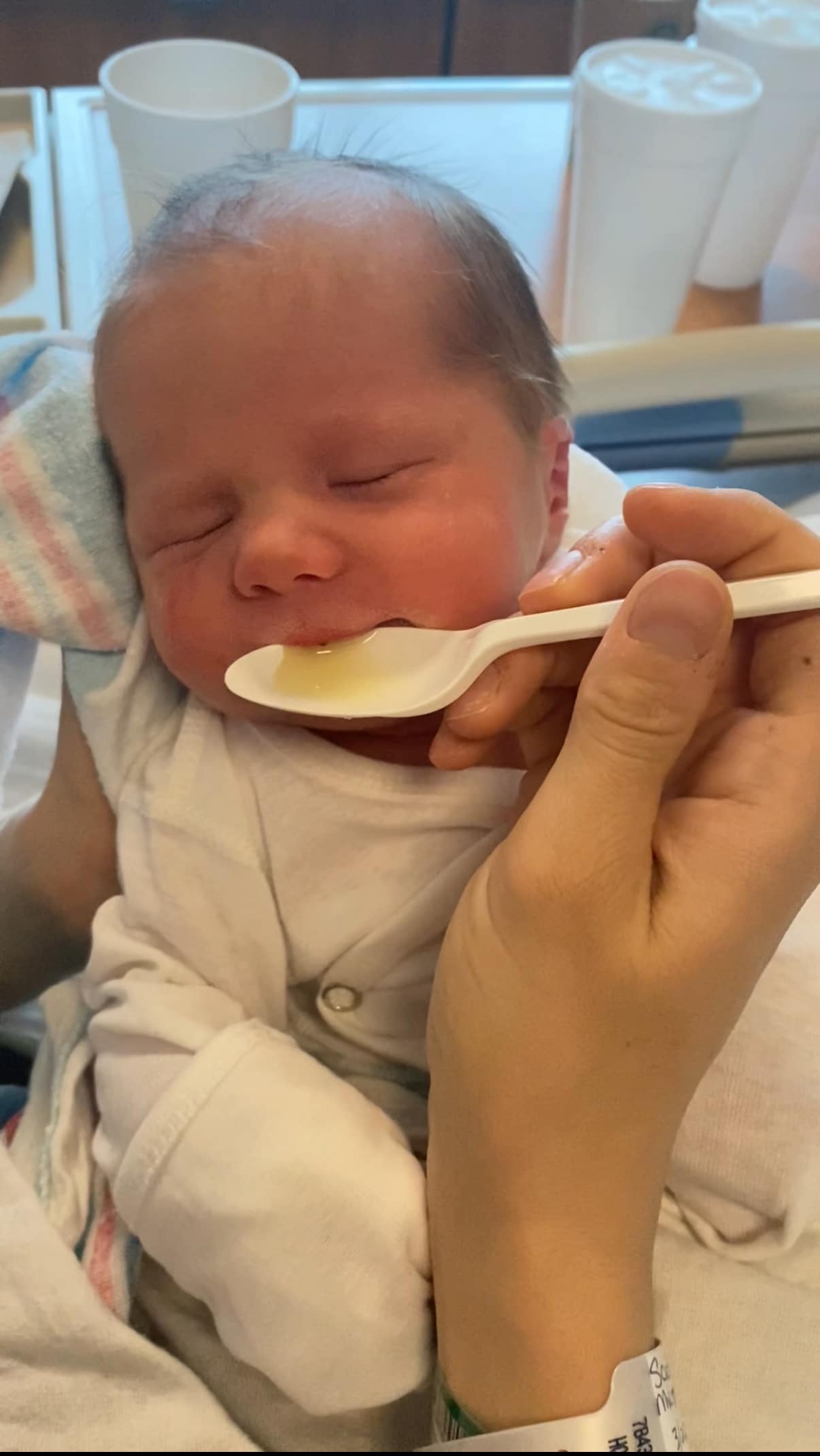
I provided my second son with colostrum on the second day of his life. I harvested colostrum for a few weeks prior to delivery (starting around 36 weeks) to have some expressed colostrum available in case of low blood sugar or any type of need for supplementation.
He was extra drowsy on day two — a very common newborn pattern — and kept dozing at the breast. I was worried that he wasn’t getting enough milk and decided to use the thawed colostrum I had brought with me to the hospital. The colostrum I provided was to supplement what he was getting at the breast and not replace a feeding at the breast. I brought the frozen colostrum in a cooler with me to my scheduled c-section and the RN’s at the hospital put the colostrum in the fridge for me where it thawed.
With my first baby, we struggled with hypoglycemia and needed supplementation. This time, I wanted to be proactive and prepared. You can find my full labor stories here and here.
How I Offered the Colostrum
- I used a spoon and a syringe to avoid early bottle or nipple preference.
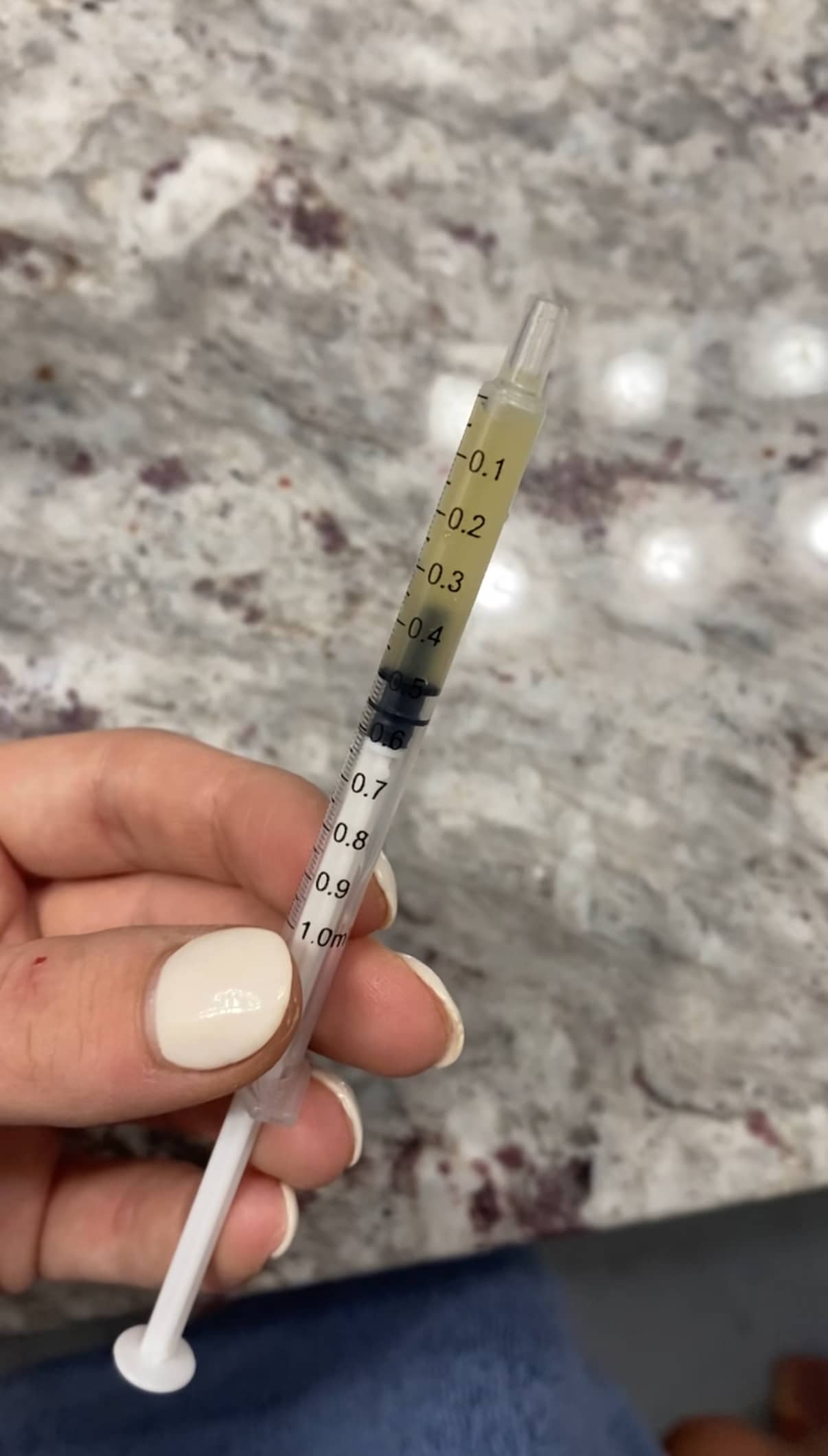
- In this video, I am slowly providing 1-2 mL directly into his mouth using a syringe.
- We still nursed 8–12 times per day to ensure my breasts received enough stimulation for milk supply regulation.
What Is Colostrum Harvesting?
Colostrum harvesting is the practice of hand-expressing and collecting small amounts of colostrum during the third trimester. This creates a reserve that can be used after birth if:
- Baby is too sleepy to latch effectively
- Supplementation is recommended
- There are delays in milk coming in
- Baby has low blood sugar or specific medical needs
Because colostrum is thick, hand expression is the recommended method of collection. Collecting colostrum before birth does not “steal” milk or reduce the amount of milk that baby will have access to when they are born. A hormonal shift occurs at birth that stimulates your body to begin producing copious milk production after delivery (known as Stage 2 lactogenesis).
A 2025 review suggests that antenatal milk expression may speed up the onset of full milk supply, reduce breast engorgement, and lower the need for formula supplementation in the early days postpartum. Source: Jasovic MO. Antenatal colostrum expression: are we interfering with nature? Int Breastfeed J. 2025 Nov 7;20(1):80. doi: 10.1186/s13006-025-00766-w. PMID: 41204307; PMCID: PMC12595854.
Expressed colostrum is not meant to overfeed your baby. It should be viewed as a small reserve for specific medical situations if needed—not as an extra supplement when your baby is already latching effectively and feeding well on their own.
Is Colostrum Harvesting Safe?
Generally, yes — when done in the third trimester, around 36-37 weeks of pregnancy. However, if you are at risk for preterm labor, you should talk to your healthcare provider first. Hand expression may stimulate uterine activity, though scientific data is limited.
Disclaimer: Although antenatal colostrum expression (ACE) is widely practiced, there is still a lack of strong evidence supporting its routine use in the general obstetric population. Studies such as the Australian Diabetes and Antenatal Milk Expressing (DAME) trial and the Danish Express-MOM study have shown that ACE is safe for low-risk pregnant women with diabetes and does not raise the risk of preterm birth.
Who Might Benefit Most From Colostrum Harvesting?
Maternal Reasons
Colostrum harvesting may be especially helpful if the birthing parent has:
- Diabetes (gestational, type 1, or type 2)
- Multiple gestation (twins, triplets)
- History of breast surgery
- Medications affecting milk supply
- Minimal breast changes during pregnancy
Infant Reasons
It may also be recommended if baby has:
- Known cleft lip or palate
- IUGR (intrauterine growth restriction)
- Down syndrome or other congenital conditions
- Cardiac complications
How to collect colostrum:
1. Gather your supplies.
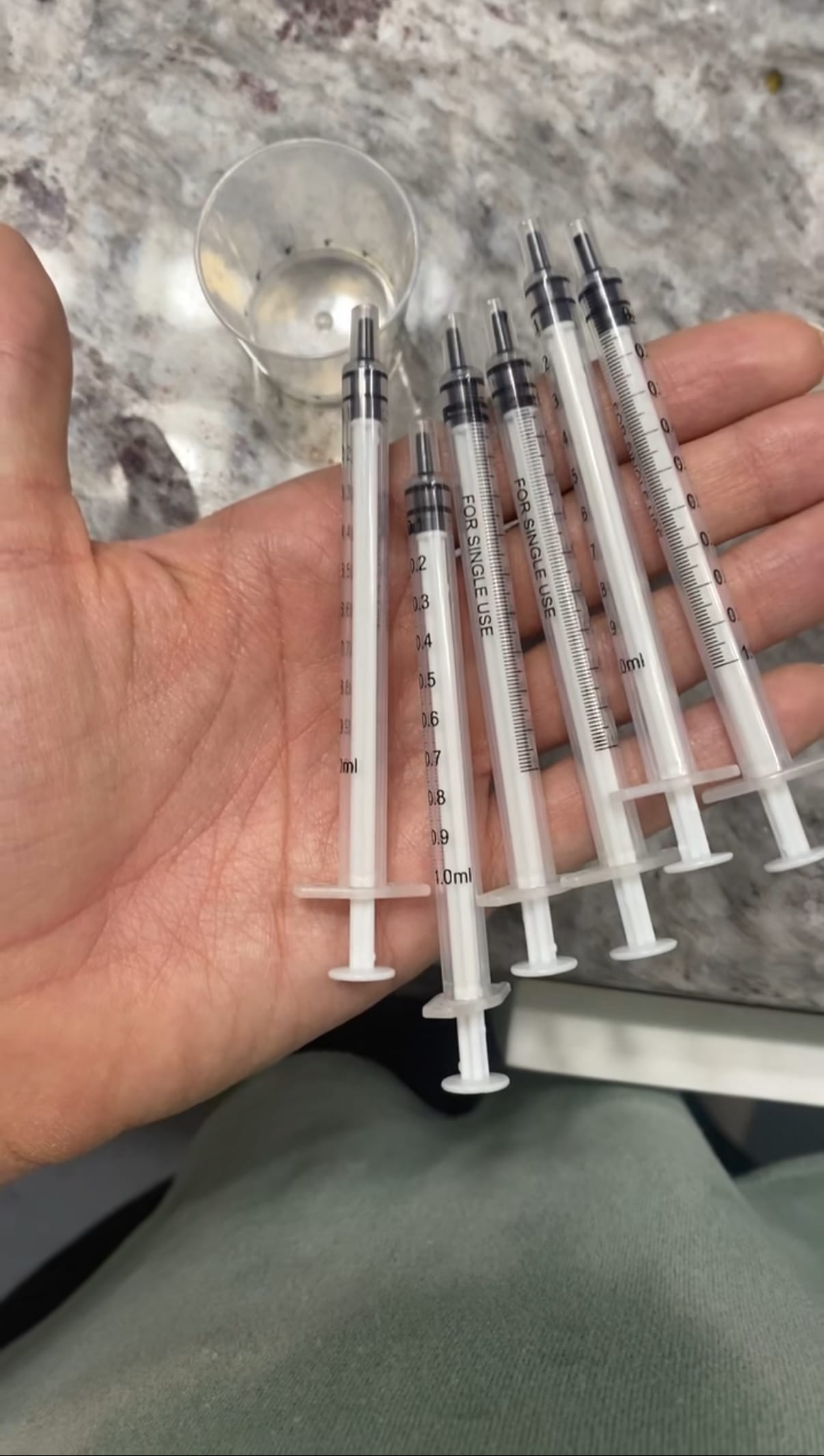
Start by purchasing sterile 1 mL syringes or a colostrum collector. Because colostrum comes in very small amounts, tiny containers work best. I personally used 1 mL syringes in the beginning, then switched to the Haakaa Colostrum Collectors once I was hand-expressing slightly larger volumes.
You can hand-express into a clean bowl, spoon, or small container and draw it up with a syringe, or express directly into the Haakaa collectors. I also had these tiny cups that I used for cup-feeding Hayes after birth, which were great for hand-expressing into. After collecting, freeze the colostrum right away so it stays safe and ready for when the baby arrives. Since the volumes are so small, it will thaw quickly when needed.
Reminder, the links I use in this blog post are Amazon affiliate links, and I receive commission if you purchase using my links.
Keep in mind that colostrum is thick and sticky—so a traditional pump often isn’t effective. Hand expression is recommended.
2. Prepare your body and mind.
Before expressing, try a relaxation routine. A warm shower or bath can help reduce stress and support milk letdown, but choose whatever helps you feel calm and centered.
Remember: you are not trying to get large amounts of colostrum. A few drops is completely normal. Gentle breast massage and warmth before expressing can also help.
3. Hand-express gently and briefly.
Most guidelines suggest that it is safe to attempt hand expression 1–2 times per day for no more than 10 minutes at a time. If you’re unsure how to hand-express, refer to this resource here.
And if you can’t get anything out—please don’t worry. This does not predict your ability to make milk for your baby. Many mothers are unable to express colostrum prenatally but go on to breastfeed without any issues.
4. Prepare for transporting it to the hospital.
If you’re planning to bring colostrum with you for delivery – which I recommend doing, have a small cooler ready for transport. Once you arrive, ask your nurse to store it for you. As long as your cooler and the syringes or collectors are clearly labeled, this is usually a very straightforward process.
Here is a video I did reviewing some of the FAQ’s I received on colostrum harvesting.
Final Thoughts
Colostrum harvesting isn’t necessary for everyone, so if you haven’t done it or simply don’t want to, that’s completely okay. We also recommend avoiding it if it’s adding extra stress, creating comparison, or making you worry about not having enough milk when your baby arrives. More high-quality research is still needed to confirm its safety before it can be recommended for all pregnant women.
Colostrum really is “liquid gold.” Whether you breastfeed directly, hand-express, or harvest colostrum before birth, these early drops are incredibly valuable for your baby’s health, immune system, and feeding success.
Sources
- Academy of Breastchard A, et al. ABM Clinical Protocol #3: Hospital guidelines for the use of supplementary feedings in the healthy term breastfed neonate, revised 2009. Breastfeed Med. 2009;4(3):175–182. [PubMed] [Google Scholar]
- Lawrence RA, Lawrence RM. Breastfeeding: A Guide for the Medical Profession. 9th ed. Elsevier; 2022. [Google Scholar]
- Barrett KJ, et al. Nelson Textbook of Pediatrics. 22nd ed. Elsevier; 2025. [Google Scholar]
- Jozsa F, Thistle J. Anatomy, Colostrum. In: StatPearls. Treasure Island (FL): StatPearls Publishing; 2025. [PubMed]
- Pillay J, Davis TJ. Physiology, Lactation. In: StatPearls. Treasure Island (FL): StatPearls Publishing; 2025. [PubMed]
- PMID: 39424398. [PubMed]
- Academy of Breastfeeding Medicine. ABM Clinical Protocol #19: Breastfeeding Promotion in the Prenatal Period (Revised 2024). Academy of Breastfeeding Medicine; 2024. [Google Scholar]
Want more? My course is a 100% evidence-based approach to starting solids in a way that encourages a healthy dietary pattern from the start.
Check out the Starting Solids 101 Course now!

Cinthia Scott is a Registered Dietitian (RD) and International Board Certified Lactation Consultant (IBCLC) with over 10 years experience in the field of dietetics. Cinthia focuses on ensuring optimal nutrition in the first 1000 days of life to ensure optimal growth and development as well as set the stage for long-term health. Cindy is an author, starting solids expert, and advocate for caregivers receiving evidence based education and support surrounding breastfeeding and starting solids.
Cinthia is co-author of the 101beforeone Starting Solids Book, “101beforeone -baby-led feeding cookbook,” and is the founder and owner of The Baby Dietitian LLC which is her private practice built to provide virtual 1:1 services for caregivers surrounding infant nutrition, toddler nutrition, and breastfeeding support. Cinthia is also the creator of the Starting Solids 101 Program which provides caregivers 1:1 support from a Pediatric Dietitian on how to provide optimal nutrition from the start and create healthy eating habits that will last their whole lifetime. To work with Cinthia, you can access her services here.
Cinthia provides tons of free information for parents on her social media accounts as well.
- Instagram: @The.Baby.Dietitian
- Tiktok: @The.Baby.Dietitian