



Products I Would (and Wouldn’t) Buy as a Third-Time Mom and IBCLC
As a third-time mom and International Board Certified Lactation Consultant (IBCLC), I’ve learned that not all postpartum and breastfeeding products are created equal. Some items are genuinely helpful, others are overhyped, and a few can even interfere with breastfeeding when used incorrectly.
Below is my honest, evidence-based breakdown of popular breastfeeding and postpartum products: what I’d buy, what I’d skip, and why – based on both clinical experience and personal use.
Some products may link to my Amazon Storefront – I do receive commission if you purchase using my links.
Brewer’s Yeast
Brewer’s yeast is commonly marketed as a milk supply booster and is often used in lactation cookie recipes.
What the evidence says:
- There is no solid human research showing that brewer’s yeast increases milk supply. LactMed confirms there are no valid studies supporting its effectiveness.
- Occasional use is generally safe, but overconsumption can cause gastrointestinal discomfort in some mothers.
Nutritional benefits:
- Contains small amounts of calcium, iron, zinc, vitamin B12, and chromium
- About 5g protein and 4g fiber per tablespoon
Will I buy it?
Probably not, but maybe. I appreciate that some brands are third-party tested, and I’ll still use it occasionally when baking lactation treats for friends.
Nipple Shields
Nipple shields can be helpful, but they are often misunderstood.
What to know:
- They can support latch in specific situations.
- They should not be a first-line solution without an IBCLC assessment to identify the root cause of latch issues.
- Long-term use may make weaning off the shield difficult and, in some cases, can limit breast stimulation and reduce milk transfer.
- Some health professionals believe that they can reduce milk transfer – this is a mixed opinion.
My Take:
When nipple shields are used, they should come with a clear plan and professional guidance. If a nipple shield helps you continue providing milk to your baby, you should absolutely use it. Any amount of breastmilk you’re able to provide has benefits – regardless of the tools needed along the way. And if you’re using a nipple shield, you are not “less than” or less successful than a mom who doesn’t need one. You are still breastfeeding.
Will I buy it?
No. I’m hoping that I won’t need one!
Soothie Pacifiers
If I were to use a pacifier, this would be my preferred brand and shape.
Evidence-based guidance:
- The Academy of Breastfeeding Medicine (ABM) recommends limiting pacifier use until breastfeeding is well established, as early use may affect milk supply and feeding cues.
- Pacifiers can be appropriate in specific situations, such as:
- Premature infants
- Painful procedures
- Sleep onset (to reduce SIDS risk)
Will I buy it?
Yes. I will keep one on hand “just in case,” but it won’t be a daily tool early on if things go “as expected.”
Comotomo Bottles
Let’s clear something up first.
No bottle nipple is “just like the breast.” That’s simply not true.
Why I don’t love this style:
- Babies often latch differently on these nipples, which can encourage a shallow latch
- That said, some babies strongly prefer this bottle, and if it works for your baby – that’s perfectly okay!
Will I buy it?
No, I’m leaving this one off my registry. I prefer Evenflo, Dr. Brown’s, and Lansinoh bottle nipples. Be sure to choose a slow-flow nipple (newborn or 0–3 months) to help avoid excessive milk flow for a breastfed baby.
Haakaa Pump
I already own one from previous pregnancies, so I won’t be purchasing another—but here’s my honest take.
Pros:
- Can help collect small amounts of milk
- Some parents love it
Cons:
- Not essential
- Personally, nursing made nursing more uncomfortable for me! But I have heard the exact opposite from others.
- Can cause nipple pain, swelling, oversupply, or frustrate baby if used incorrectly or right before feeding
Bottom line:
If you choose to use one, guidance from an IBCLC is recommended to ensure it’s being used correctly and that your baby (not the Haakaa) is receiving the majority of the milk you produce.
Evenflo Glass Bottles
If bottle-feeding is needed, this is my preferred bottle and nipple shape.
Why I like them:
- Gradual slope supports a deeper latch
- Very soft, flexible nipple material
- Glass reduces plastic exposure
- Non-porous surfaces may help retain more milk fat compared to plastic – small studies show this but more research is needed.
Important note:
- Bottles don’t need to be introduced if breastfeeding is going well and separation is rare.
- Research suggests avoiding artificial nipples early on may help babies return to exclusive breastfeeding (1,2,3).
Frida Mom Breast Milk Alcohol Test Strips
Will I buy them?
No.
Here’s why:
- If you’ve had one standard drink, waiting about two hours before nursing is considered safe, no test strips or pumping and dumping required.
- Avoiding alcohol entirely is the safest choice, but these strips generally aren’t necessary.
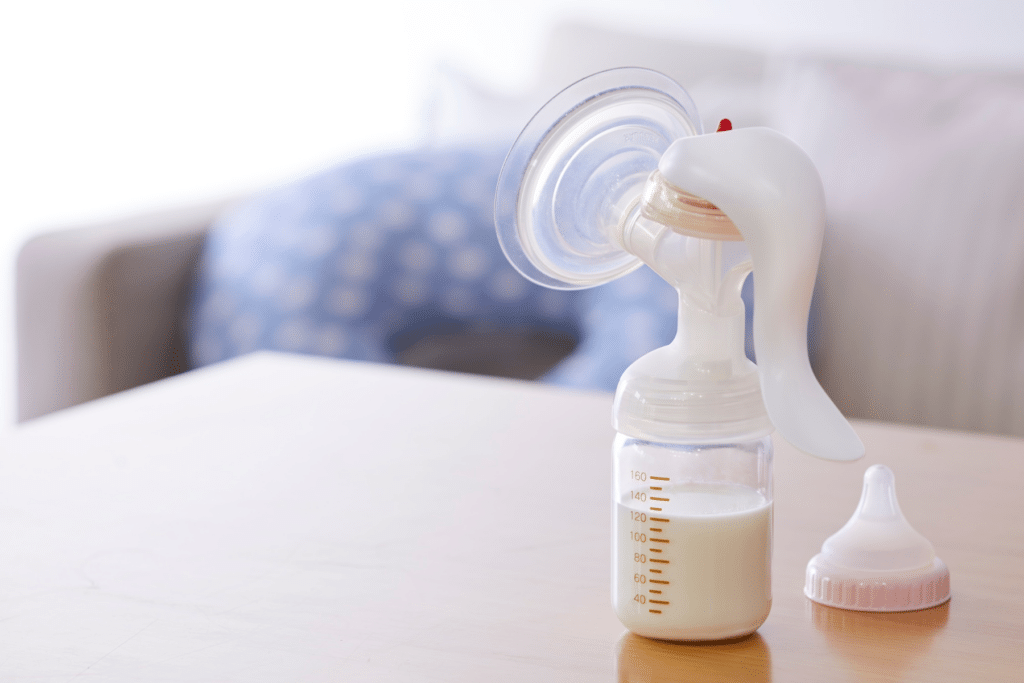
Manual (Hand) Pump
Absolutely yes.
Why I love them:
- Perfect for travel or work
- No outlet required
- Quick and convenient for occasional pumping
Important caveat:
- Not ideal as a primary pumping method, as they could affect milk supply over time. Not as effective at removing milk as a hospital grade electric pump.
Will I buy it?
Yes, definitely a “just in case” essential.
Hot and Cold Breast Therapy Packs
We use these constantly for everything, from mastitis to bumped heads.
Benefits:
- Cold packs helped tremendously with engorgement
- Warm packs before pumping can improve milk removal
Are they necessary?
No, you can DIY alternatives at home. But they’re a very ‘nice-to-have’ option not essential.
Sunflower Lecithin
This one gets a lot of attention, and for good reason.
What the research suggests:
- May help reduce breast inflammation and emulsify milk
- Could be useful for plugged ducts or recurrent mastitis
- Contains choline, which has anti-inflammatory properties. This is the main ingredient that has shown benefits to reducing inflammation and plugged ducts (4,5).
Why I skip it:
- I already prioritize a choline-rich diet and supplement – if you are already doing this, a sunflower lecithin supplement is not needed (usually!).
- Some people experience GI discomfort – if so, discontinue use!
Final Thoughts
As both a mom and an IBCLC, my biggest takeaway is this: No product replaces individualized breastfeeding support. Many of these items can be helpful in the right context – but guidance, education, and proper use matter far more than what’s on your registry.
References
1- Howard CR, de Blieck EA, ten Hoopen CB, et al. Physiologic stability of newborns during cup- and bottlefeeding. Pediatrics 1999;104(Pt 2):1204–1207.
2- Malhotra N, Vishwambaran L, Sundaram KR, et al. A controlled trial of alternative methods of oral feeding in neonates. Early Hum Dev 1999;54:29–38.
3- Marinelli KA, Burke GS, Dodd VL. A comparison of the safety of cupfeedings and bottlefeedings in premature infants whose mothers intend to breastfeed. J Perinatol 2001;21:350–355.
4- Chan MM, Nohara M, Chan BR, et al. Lecithin decreases human milk fat loss during enteral pumping. J Pediatr Gastroenterol Nutr 2003;36:613–615.
5- Patel SH, Vaidya YH, Patel RJ, et al. Culture independent assessment of human milk microbial community in lactational mastitis. Sci Rep 2017;7:7804
Want more? My course is a 100% evidence-based approach to starting solids in a way that encourages a healthy dietary pattern from the start.
Check out the Starting Solids 101 Course now!
Cinthia Scott is a Registered Dietitian (RD) and International Board Certified Lactation Consultant (IBCLC) with over 10 years experience in the field of dietetics. Cinthia focuses on ensuring optimal nutrition in the first 1000 days of life to ensure optimal growth and development as well as set the stage for long-term health. Cindy is an author, starting solids expert, and advocate for caregivers receiving evidence based education and support surrounding breastfeeding and starting solids.
Cinthia is co-author of the 101beforeone Starting Solids Book, “101beforeone -baby-led feeding cookbook,” and is the founder and owner of The Baby Dietitian LLC which is her private practice built to provide virtual 1:1 services for caregivers surrounding infant nutrition, toddler nutrition, and breastfeeding support. Cinthia is also the creator of the Starting Solids 101 Program which provides caregivers 1:1 support from a Pediatric Dietitian on how to provide optimal nutrition from the start and create healthy eating habits that will last their whole lifetime. To work with Cinthia, you can access her services here.
Cinthia provides tons of free information for parents on her social media accounts as well.
- Instagram: @The.Baby.Dietitian
- Tiktok: @The.Baby.Dietitian