

Iron-Fortified Cereals for Babies
Starting solids is such an exciting (and often messy!) milestone. As pediatric dietitians, one of the most common questions we hear from parents is about iron‑fortified cereals: Are they necessary? Do babies need them? And what are the real benefits?
Let’s break it all down so you can feel confident about supporting your baby’s iron needs during this important stage of development.
Disclaimer: Some of the links in this blog may be affiliate links, and I will receive a commission if you purchase through that link; this is at no extra cost to you.
Why Iron Matters for Babies
Iron plays a critical role in your baby’s growth and development, particularly for brain development, oxygen transport, and overall energy levels.
During pregnancy, especially in the third trimester, babies build iron stores designed to support their needs for the first six months after birth. Full‑term, healthy infants are typically born with adequate iron stores, which are then supplemented by the small amount of iron found in breastmilk or formula.
However, around 6 months of age, those iron stores begin to decline. This is exactly why introducing iron‑rich complementary foods becomes so important once solids are started. For more information on iron, read our iron blog here!
The American Academy of Pediatrics states:
“Iron deficiency in the first two years may cause future delays in intellectual, behavioral, and motor development.”
Iron deficiency is also the most common nutritional deficiency in children worldwide [2], which is why thoughtful iron inclusion during infancy matters.
Do You Have to Serve Iron‑Fortified Cereal?
Short answer: No.
Iron‑fortified cereal does not have to be your baby’s first food, and it is not required for every child. If your baby is regularly consuming naturally iron‑rich foods at meals, fortified products may not be necessary.
That said, there are situations where iron‑fortified cereals can be a helpful and practical tool.
When Iron‑Fortified Cereals Can Be Helpful
While not every baby needs fortified products, pediatric dietitians often recommend them in certain circumstances, including:
- Babies who are iron deficient or at higher risk for deficiency
- Babies not consistently meeting iron needs through whole foods
- Children following restrictive diets for medical, cultural, or personal reasons
- Vegetarian or vegan diets
- Preterm infants who may have lower iron stores at birth
- Picky eaters who struggle with accepting meat or other iron‑rich foods
Research shows that iron‑fortified infant cereals can play a meaningful role in preventing iron deficiency anemia during this critical window of growth, when iron needs are especially high [5,6,7].
Heme vs. Non‑Heme Iron: What’s the Difference?
There are two main types of dietary iron:
Heme iron
- Found in animal foods such as meat, poultry, and fish
- More easily absorbed by the body (approximately 15–35%)
Non‑heme iron
- Found in plant foods, eggs, and fortified products like cereals
- Less efficiently absorbed (approximately 2–20%)
Naturally occurring iron from whole foods, especially heme iron, is generally better absorbed than iron added through fortification. This is why we encourage offering a variety of iron‑rich foods rather than relying solely on fortified cereals.
Boost Iron Absorption with Vitamin C
Here’s a simple but powerful tip: pair iron‑rich foods with vitamin C.
Vitamin C significantly enhances the absorption of non‑heme iron by converting it into a more absorbable form. This pairing can make a big difference, especially for babies relying on plant‑based or fortified iron sources.
Vitamin C rich foods you can pair with iron:
- Strawberries, oranges, kiwi, or mango
- Bell peppers (any color)
- Broccoli, Brussels sprouts, or cabbage
- Tomatoes or tomato sauce
- Sweet potatoes
Remember, for all things iron – check out our iron blog!
What to Look for When Choosing an Iron‑Fortified Cereal
If you decide to include iron‑fortified cereal in your baby’s diet, here’s what we recommend:
- Choose unsweetened and unsalted options. Babies don’t need added sugar or salt, and plain options help support development of a taste preference for a wide variety of foods.
- Check the nutrition label. Baby cereals are typically fortified with iron, but if you’re purchasing an adult cereal, verify iron content on the label.
- Opt for whole grains. Oat, barley, and multigrain cereals provide additional fiber and nutrients.
- Limit rice‑based cereals. The FDA has expressed concerns about arsenic content in rice products. Rice absorbs arsenic from the environment at higher rates than other grains [4]. Oat, barley, and multigrain cereals are recommended alternatives that still provide excellent iron fortification without the arsenic concern [4,5].
What About Regular Oats?
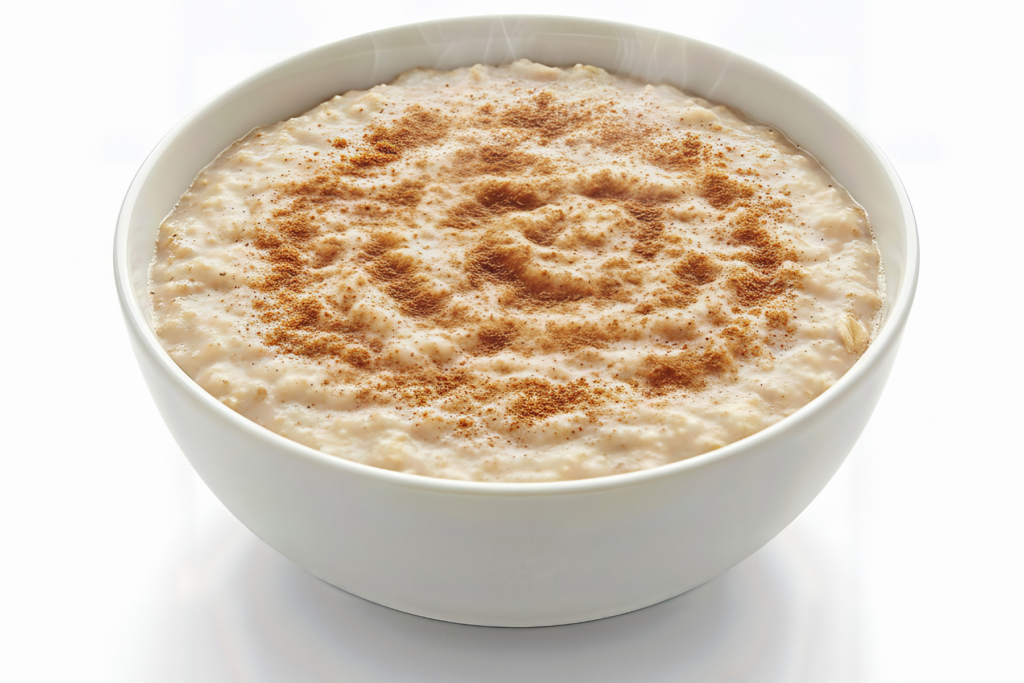
Oats can be introduced as soon as your baby is developmentally ready for solids—typically around 6 months of age.
Benefits of Oats for Babies
- Good source of fiber and nutrients
- Easily digestible
- Support satiety
- Versatile and easy to prepare
Do Oats Have to Be Iron‑Fortified?
Not at all. Regular oats are perfectly appropriate for babies. Baby oat cereals are often fortified with iron, which is why they’re commonly recommended early on, but fortified cereals are not required.
If you choose regular oats instead, just be mindful to include iron‑rich foods elsewhere throughout the day. As long as your baby’s overall diet meets iron needs, there’s no need to stress about using a specific fortified product.
Click here to view our oats Instagram post that breaks down in detail the different types of oats!
Our Iron‑Fortified Cereal Recommendations
As pediatric dietitians, these are some iron‑fortified cereals we commonly recommend:
- Else Oatmeal Cereal
Clean label approved, non-riced base, 0g added sugar, fortified with many important nutrients like choline, iodine, and iron.
Rich in iron, calcium and vitamin D, with a low amount of added sugar.
Made from ancient grains and fortified with important nutrients your baby needs. Clean label approved.
Fortified with iron and other nutrients, and made with no added sugars
Clean label approved, made without added sugar or artificial flavors. Fortified with iron and B vitamins.
0g added sugar, non-riced base, fortified with important vitamins like iron, calcium, and vitamin D.
Fortified with many nutrients like calcium, iron, B vitamins, and no added sugar!
Key Takeaways
- Not all children need iron‑fortified products. Iron from whole foods is often better absorbed.
- Focus on balanced meals that include a heme, non‑heme, or fortified iron source paired with vitamin C.
- Iron‑fortified cereal is a tool, not a requirement.
- Variety matters. Offer meats, beans, lentils, eggs, leafy greens, and fortified options.
- When in doubt, reach out to your pediatrician or a pediatric dietitian for individualized guidance.
Feeding your baby can feel overwhelming, but you’re doing a great job. Whether you choose iron‑fortified cereals or focus on naturally iron‑rich foods, what matters most is offering a variety of nourishing foods and supporting a healthy relationship with eating.
References
1. American Academy of Pediatrics Committee on Nutrition. Diagnosis and Prevention of Iron Deficiency and Iron-Deficiency Anemia in Infants and Young Children (0-3 Years of Age). Pediatrics. 2010;126(5):1040-1050.
2- Aksu, T., & Ünal, Ş. (2023). Iron Deficiency Anemia in Infancy, Childhood, and Adolescence. Turkish archives of pediatrics, 58(4), 358–362. https://doi.org/10.5152/TurkArchPediatr.2023.23049
3. Centers for Disease Control and Prevention. Iron. Infant and Toddler Nutrition. Updated December 2024.
4. U.S. Food and Drug Administration. Inorganic Arsenic in Rice Cereals for Infants: Action Level Guidance for Industry. 2020.
5. Walter, T., Dallman, P. R., Pizarro, F., Velozo, L., Peña, G., Bartholmey, S. J., Hertrampf, E., Olivares, M., Letelier, A., & Arredondo, M. (1993). Effectiveness of iron-fortified infant cereal in prevention of iron deficiency anemia. Pediatrics, 91(5), 976–982.
6. Green T, et al. Iron-fortified infant cereal may help reduce dietary iron inadequacy during later stages of infancy. American Society for Nutrition. 2023.
7. Gedfie S, et al. Prevalence and Associated Factors of Iron Deficiency and Iron Deficiency Anemia Among Under-5 Children: A Systematic Review and Meta-Analysis. Global Pediatric Health. 2022.
8. Dietary Guidelines for Americans, 2020-2025. U.S. Department of Agriculture and U.S. Department of Health and Human Services.
Want more? My course is a 100% evidence-based approach to starting solids in a way that encourages a healthy dietary pattern from the start.
Check out the Starting Solids 101 Course now!

Cinthia Scott is a Registered Dietitian (RD) and International Board Certified Lactation Consultant (IBCLC) with over 10 years experience in the field of dietetics. Cinthia focuses on ensuring optimal nutrition in the first 1000 days of life to ensure optimal growth and development as well as set the stage for long-term health. Cindy is an author, starting solids expert, and advocate for caregivers receiving evidence based education and support surrounding breastfeeding and starting solids.
Cinthia is co-author of the 101beforeone Starting Solids Book, “101beforeone -baby-led feeding cookbook,” and is the founder and owner of The Baby Dietitian LLC which is her private practice built to provide virtual 1:1 services for caregivers surrounding infant nutrition, toddler nutrition, and breastfeeding support. Cinthia is also the creator of the Starting Solids 101 Program which provides caregivers 1:1 support from a Pediatric Dietitian on how to provide optimal nutrition from the start and create healthy eating habits that will last their whole lifetime. To work with Cinthia, you can access her services here.
Cinthia provides tons of free information for parents on her social media accounts as well.
- Instagram: @The.Baby.Dietitian
- Tiktok: @The.Baby.Dietitian