

How to Build a Milk Supply for a NICU Baby (From a Pediatric Dietitian & IBCLC)
When your baby is in the NICU, feeding can feel overwhelming and uncertain. If your goal is to breastfeed or provide breast milk, you may be wondering:
“How do I build my milk supply when I’m separated from my baby?”
As a pediatric dietitian and International Board Certified Lactation Consultant (IBCLC)—and a NICU mom myself—I’ve walked this journey both professionally and personally.
Here are the most effective strategies that helped me establish a full milk supply for my NICU baby.
Why Early Breast Exposure Matters in the NICU
NICU babies don’t have to wait until they are “ready to eat” to begin learning how to breastfeed.
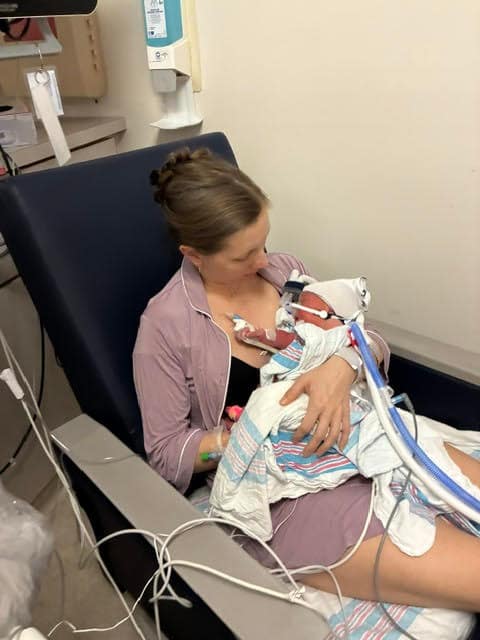
Many preterm and medically complex infants can begin rooting and attempting to latch as early as ~28 weeks gestation when given the opportunity. Even if milk transfer isn’t happening yet, non-nutritive suckling at the breast is an evidence-based practice that supports feeding development.
Research shows that early breast exposure can help NICU babies:
- Practice sucking movements
- Develop suck–swallow–breathe coordination
- Build the skills needed to transition from tube feeding to breastfeeding
Even for babies receiving respiratory support, such as CPAP, these early interactions at the breast can be a meaningful and developmentally appropriate step in their feeding journey.
Tiny babies are doing important developmental work—even before full feeds begin.
1. Start Hand Expression as Early as Possible
One of the most important steps to build milk supply is early breast stimulation.
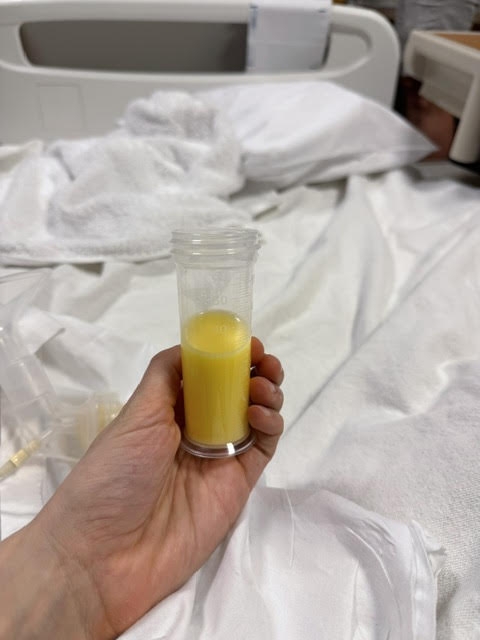
As soon as you are medically stable after delivery, begin hand expressing—ideally within the first hour, but even later can still be very beneficial.
After birth, your body experiences a surge of hormones that signal milk production. Early stimulation helps “turn on” that process.
2. Use the Correct Flange Size
Proper flange fit is essential for both milk output and comfort.
Even if you’ve breastfed before, your flange size can change between pregnancies. Using the wrong size may:
- Decrease milk output
- Cause pain or nipple damage
- Make pumping less effective
Ask a lactation consultant for help sizing, or measure at home if needed. Reminder: an IBCLC should see you during your hospital stay!
3. Pump or Hand Express 8–12 Times Per Day
To establish a full milk supply, aim to stimulate your breasts 8–12 times per day, including overnight.
This mimics a newborn’s natural feeding pattern and signals your body to produce more milk.
Even if you’re only getting drops in the beginning—that’s completely normal.
Milk production is based on supply and demand—consistency matters most.
4. Take Advantage of Skin-to-Skin Contact
Skin-to-skin contact (kangaroo care) can significantly improve both milk production and infant outcomes.
As soon as your baby is stable, ask your NICU team about:
- Holding your baby skin-to-skin
- Early breastfeeding opportunities
- Non-nutritive sucking
Studies show skin-to-skin care can:
- Help regulate heart rate, breathing, and temperature
- Improve oxygenation and physiologic stability
- Increase breastfeeding success and duration
- Support weight gain and growth
- Reduce infection risk and parental stress
5. Utilize Colostrum Oral Care
If your baby is not yet feeding by mouth, you can still provide powerful benefits through colostrum oral care.
This involves swabbing small amounts of expressed colostrum inside your baby’s cheeks.
Benefits include:
- Immune support
- Early exposure to breast milk
- Supporting feeding readiness
6. Breastfeed as Soon as Baby Is Stable
Once your baby is ready, begin breastfeeding as soon as possible.
From there, aim to feed every 2–3 hours, following your baby’s cues and NICU guidance.
Early and frequent latching helps build milk supply, improve breastfeeding success, and strengthen bonding.
7. Prioritize Rest, Nutrition, and Hydration
Your body needs adequate fuel to produce milk.
Focus on:
- Eating balanced meals
- Staying hydrated
- Resting whenever possible
While stress is unavoidable in the NICU, supporting your overall health can positively impact milk production.
8. Use Heat and Gentle Massage Before Pumping
Applying warmth and gently massaging your breasts before pumping can:
- Stimulate letdown
- Improve milk flow
- Increase output
This simple step can make a noticeable difference.
9. Build a Strong Support System
Support is everything during a NICU stay.
For me, that looked like:
- A NICU team that respected and supported my feeding goals
- Early skin-to-skin—even in the OR
- The opportunity to do nonnutritive suckling even while my baby was on CPAP – discuss this with your care team!
- A partner who cleaned pump parts and made sure I had everything I needed
Having that level of support made it possible to stay consistent and confident in my feeding journey.
Final Thoughts: You Can Build a Milk Supply in the NICU
If you’re currently navigating the NICU and working to establish your milk supply, know this:
- Drops are enough in the beginning
- Consistency matters more than perfection
- Early exposure to the breast matters—even before full feeds
- Support can make all the difference
Your journey may not look how you imagined—but that doesn’t make it any less meaningful. You are doing an incredible job.
Sources
- Ramanathan K et al. Indian Journal of Pediatrics. 2001
- John HB et al. Advances in Neonatal Care. 2019
- Symington A, Pinelli J. Cochrane Database of Systematic Reviews. 2011
- Campbell-Yeo M et al. Pediatric Health, Medicine and Therapeutics. 2015
- Li Y et al. Trials. 2021
- Suman RP et al. Indian Pediatrics. 2008
Want more? My course is a 100% evidence-based approach to starting solids in a way that encourages a healthy dietary pattern from the start.
Check out the Starting Solids 101 Course now!

Cinthia Scott is a Registered Dietitian (RD) and International Board Certified Lactation Consultant (IBCLC) with over 10 years experience in the field of dietetics. Cinthia focuses on ensuring optimal nutrition in the first 1000 days of life to ensure optimal growth and development as well as set the stage for long-term health. Cindy is an author, starting solids expert, and advocate for caregivers receiving evidence based education and support surrounding breastfeeding and starting solids.
Cinthia is co-author of the 101beforeone Starting Solids Book, “101beforeone -baby-led feeding cookbook,” and is the founder and owner of The Baby Dietitian LLC which is her private practice built to provide virtual 1:1 services for caregivers surrounding infant nutrition, toddler nutrition, and breastfeeding support. Cinthia is also the creator of the Starting Solids 101 Program which provides caregivers 1:1 support from a Pediatric Dietitian on how to provide optimal nutrition from the start and create healthy eating habits that will last their whole lifetime. To work with Cinthia, you can access her services here.
Cinthia provides tons of free information for parents on her social media accounts as well.
- Instagram: @The.Baby.Dietitian
- Tiktok: @The.Baby.Dietitian