

Preparing for Solids Starts Before the First Bite: What I’m Doing at 3 Months as a Pediatric Dietitian Mom
One of the biggest misconceptions I see is that preparing for solids starts the day your baby turns six months old.
In reality, many of the skills babies use to eat start developing before they ever take their first bite.
No, I’m not talking about introducing solid foods before your baby is developmentally ready. Leading health organizations; including the American Academy of Pediatrics (AAP), World Health Organization (WHO), Academy of Breastfeeding Medicine (ABM), Dietary Guidelines for Americans, CDC, Health Canada, Canadian Paediatric Society, and the Australian NHMRC—recommend introducing complementary foods around 6 months of age for most healthy, full-term infants. Until then, breast milk and/or infant formula provide all the nutrition babies need. Read here to learn more about why 6 months is the recommended age to start solids!
That doesn’t mean you have to wait until six months to prepare.
Here are five things I’m doing with my own 3-month-old.
1. Prioritizing Tummy Time
Tummy time is one of the simplest ways to begin preparing for solids.
Tummy time helps babies develop the head, neck, shoulder, and core strength needed for sitting independently – a developmental milestone that supports safe feeding.
Research has consistently shown that increased tummy time is associated with improved gross motor development during infancy. Since independent sitting is one of the key readiness signs for starting solids, every tummy time session is helping build skills your baby will eventually use at the table.
What we’re doing: Short tummy time sessions throughout the day, gradually increasing as she tolerates more.
2. Offering Teethers
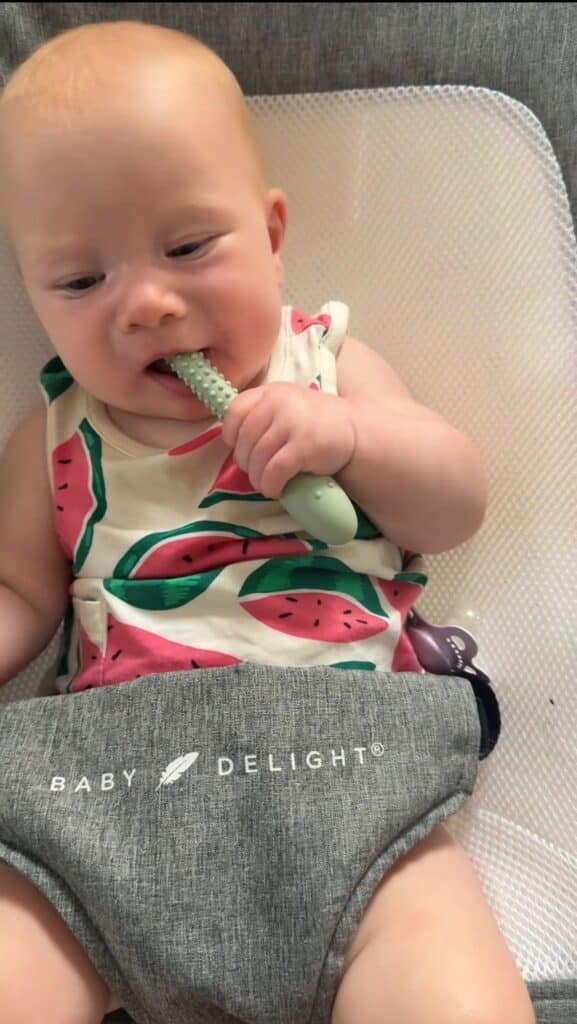
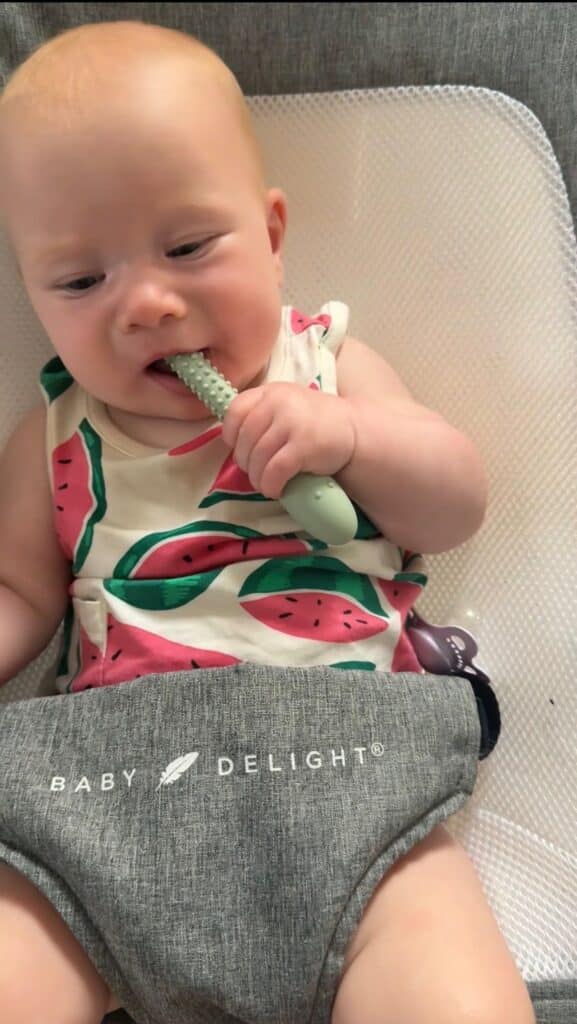
Although Clara isn’t eating food yet, she’s constantly exploring safe teethers.
This isn’t just about soothing gums.
Mouthing toys helps babies develop:
- Oral motor skills
- Hand-to-mouth coordination
- Sensory awareness
- Jaw stability
- Exploration of different textures
These experiences may help babies become more comfortable using their mouths before food is introduced. Your baby’s mouth is one of the primary ways they learn about the world during early infancy.
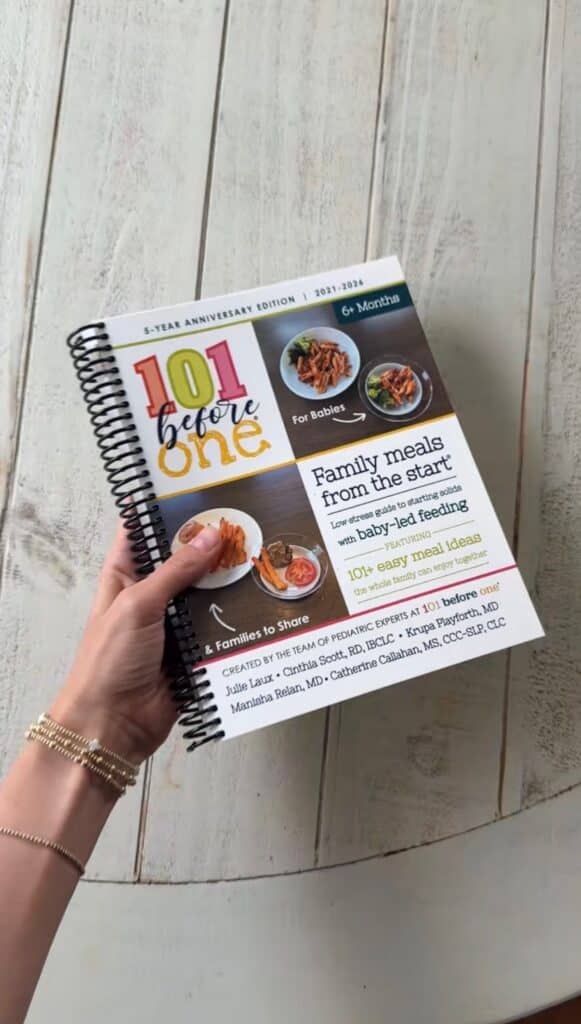
Our own feeding guide also encourages introducing teethers before solids as part of building oral motor skills and hand-to-mouth coordination. (See 101 Before One.)
3. Setting Up Our Feeding Space
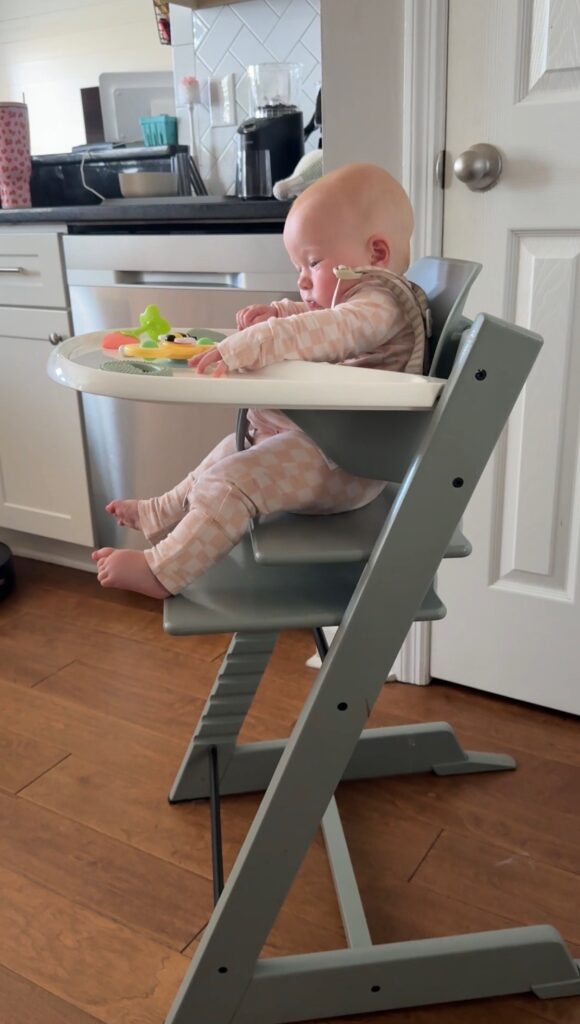
One thing parents often overlook is that how a child sits during meals matters almost as much as what they’re eating.
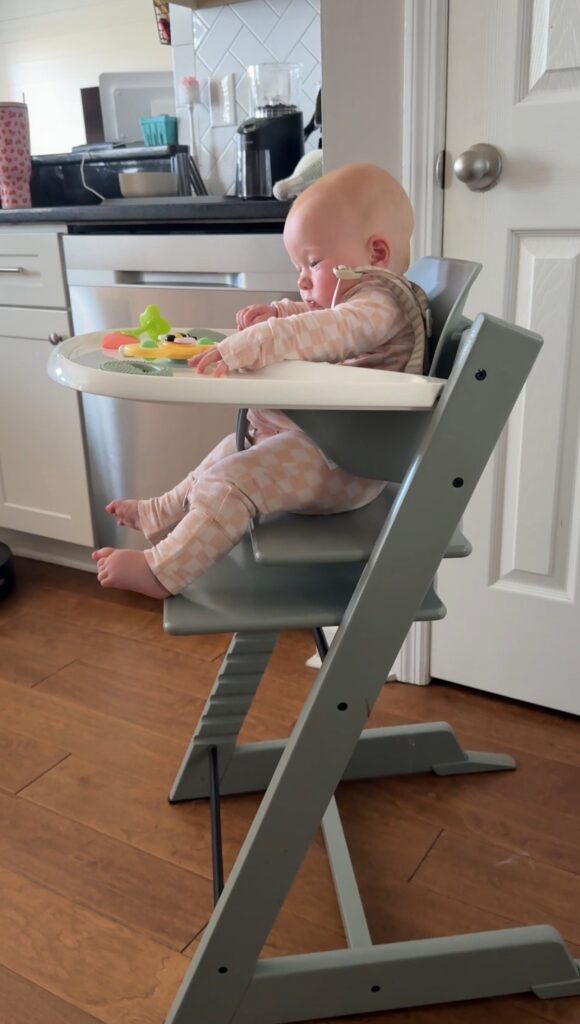
Before Clara ever takes her first bite, I’m making sure we have:
- A supportive highchair
- 90-90-90 positioning (hips, knees, and ankles)
- A footrest she can actually reach
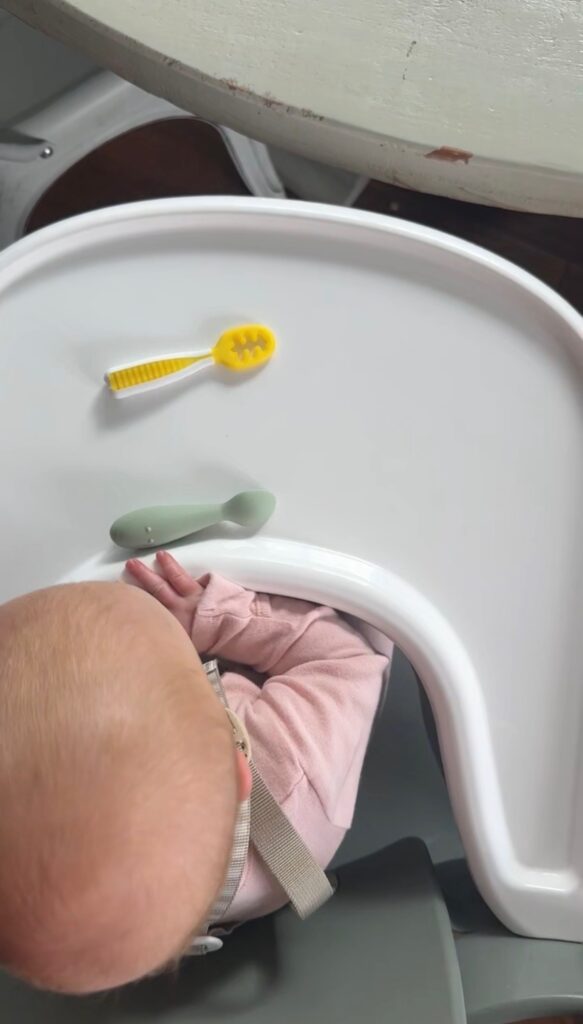
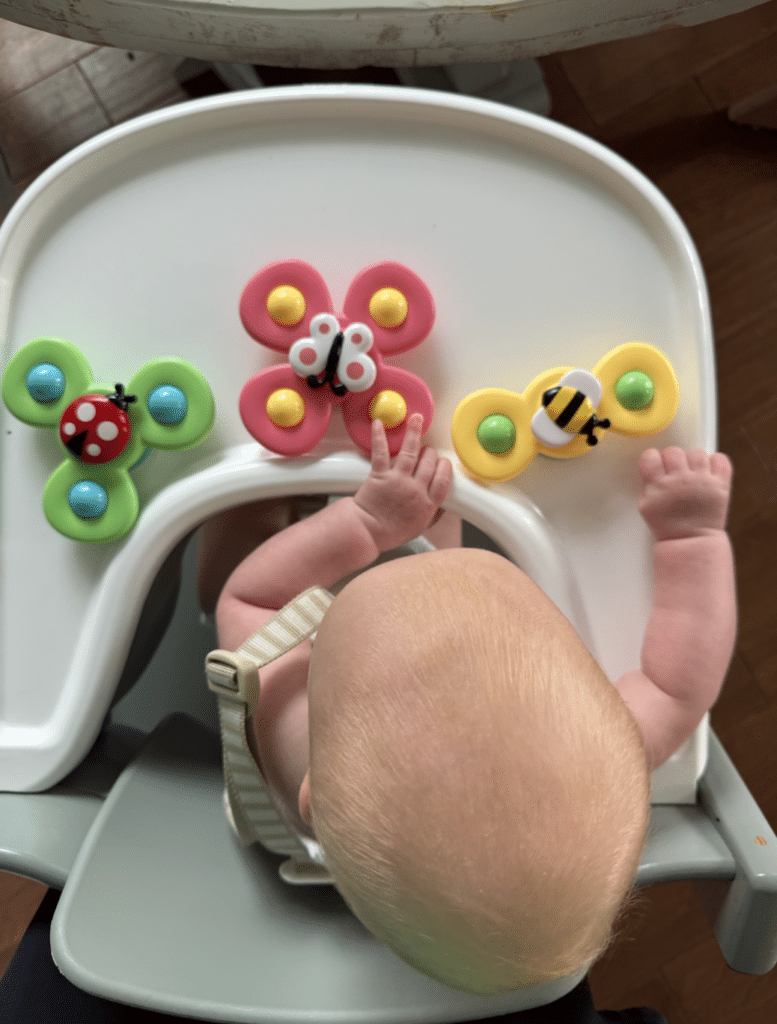
- Simple feeding essentials like little spoons, suction bowls, and an open cup
Good positioning improves stability, which allows babies to focus on learning the complex skills involved in chewing, swallowing, and self-feeding.
4. Flavor Exposure Starts During Breastfeeding
One of my favorite ways to prepare for solids doesn’t involve solids at all.
Because I’m breastfeeding, I’m intentionally eating a wide variety of foods.
Research has shown that flavors from a mother’s diet pass into breast milk. Babies are exposed to these changing flavors, which may help familiarize them with foods they’ll encounter later during complementary feeding.
This doesn’t mean you need a perfect diet.
It simply means that eating a variety of fruits, vegetables, herbs, spices, proteins, and other nutritious foods may give your baby early flavor experiences before the first bite of solid food.
5. Refreshing My Knowledge
Even as a pediatric dietitian, I still review the evidence before each of my own children starts solids.
Recommendations evolve, new research emerges, and guidelines change.
I’m brushing up on:
- developmental signs of readiness
- allergen introduction
- responsive feeding
- choking prevention
- evidence-based first foods
One area that has changed significantly over the last decade is early allergen introduction. We now know that introducing common allergens around the time babies begin solids – rather than delaying them, can help reduce the risk of certain food allergies in many infants. This article has more information on how to introduce allergens to your little one!
Feeling prepared as a parent often makes the transition to solids much less stressful.
A Friendly Reminder
Preparing for solids does not mean feeding solids early.
For most healthy, full-term infants, breast milk and/or infant formula continue to provide all the nutrition they need until around six months of age, when babies begin showing developmental signs of readiness for complementary foods.
There are a few exceptions. For example, vitamin D supplementation is recommended for breastfed infants beginning shortly after birth, and certain infants, such as those born prematurely, with low birth weight, or to mothers with iron deficiency, may require iron supplementation before six months under the guidance of their healthcare provider. Read here for more information about iron!
The Bottom Line
Starting solids isn’t just about the first spoonful of food.
Many of the skills babies rely on during feeding begin developing months earlier through movement, play, oral exploration, and everyday experiences.
Preparing for solids isn’t about starting food early, it’s about building the foundation first.
References
Baby Leads the Way for practical implementation and additional evidence summaries.
American Academy of Pediatrics. Complementary Feeding and Introduction of Allergenic Foods.
World Health Organization. Infant and Young Child Feeding.
Academy of Breastfeeding Medicine Clinical Protocol #29: Iron, Zinc, and Vitamin D Supplementation.
Dietary Guidelines for Americans, 2020–2025.
Health Canada & Canadian Paediatric Society. Nutrition for Healthy Term Infants.
Australian NHMRC. Infant Feeding Guidelines.
Naylor AJ, Morrow AL. Developmental Readiness of Normal Full-Term Infants to Progress from Exclusive Breastfeeding to the Introduction of Complementary Foods. (2001).
Want more? My course is a 100% evidence-based approach to starting solids in a way that encourages a healthy dietary pattern from the start.
Check out the Starting Solids 101 Course now!

Cinthia Scott is a Registered Dietitian (RD) and International Board Certified Lactation Consultant (IBCLC) with over 10 years experience in the field of dietetics. Cinthia focuses on ensuring optimal nutrition in the first 1000 days of life to ensure optimal growth and development as well as set the stage for long-term health. Cindy is an author, starting solids expert, and advocate for caregivers receiving evidence based education and support surrounding breastfeeding and starting solids.
Cinthia is co-author of the 101beforeone Starting Solids Book, “101beforeone -baby-led feeding cookbook,” and is the founder and owner of The Baby Dietitian LLC which is her private practice built to provide virtual 1:1 services for caregivers surrounding infant nutrition, toddler nutrition, and breastfeeding support. Cinthia is also the creator of the Starting Solids 101 Program which provides caregivers 1:1 support from a Pediatric Dietitian on how to provide optimal nutrition from the start and create healthy eating habits that will last their whole lifetime. To work with Cinthia, you can access her services here.
Cinthia provides tons of free information for parents on her social media accounts as well.
- Instagram: @The.Baby.Dietitian
- Tiktok: @The.Baby.Dietitian