

What I Learned as a Pediatric Dietitian, IBCLC, and NICU Mom
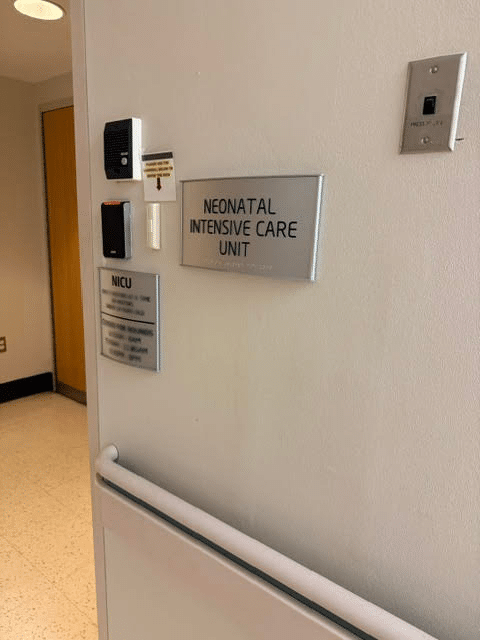
When I was pregnant with our sweet rainbow baby girl, Clara, I never imagined we would spend her first six days of life in the NICU.
As a pediatric dietitian and International Board Certified Lactation Consultant (IBCLC), I have spent years helping families navigate infant feeding challenges. I understood the medical side of NICU care and the importance of respiratory support, breastfeeding support, and early nutrition interventions. But experiencing a NICU stay as a mother was entirely different.
If you’re currently navigating a NICU stay or wondering what those first days might look like, I hope sharing our story provides both encouragement and practical insight.
If you haven’t read Clara’s birth story and how she ended up in the NICU, you can read that post here.
The First Few Hours After Birth
After delivery via c-section at 37 weeks and 3 days, Clara came out screaming and exceeded expectations. She weighed 7 pounds, 3 ounces and had Apgar scores of 8 and 8. Initially, everything looked great.
Within the first hour, however, it became clear that she was struggling to maintain her oxygen saturations independently. The NICU team quickly transferred her for respiratory support with CPAP while I remained in recovery.
One of the hardest moments of the entire experience was being wheeled into the recovery room without my baby. While my husband accompanied Clara to the NICU, I was left processing the unexpected reality that our first hours together would look very different than I had imagined.
Later that afternoon, I was able to briefly visit her in the NICU. The medical team explained that they believed she simply needed additional support transitioning to life outside the womb and were hopeful that she would only require respiratory assistance for a short period of time. We clung tightly to that hope.
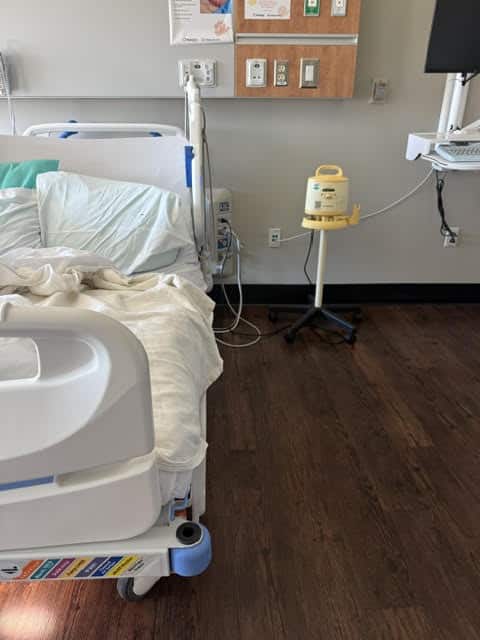
After returning to my hospital room, I focused on the one thing I could control: protecting my milk supply. Since Clara wasn’t able to nurse, I began hand expressing colostrum frequently to mimic the stimulation that would normally occur during breastfeeding.
I woke every few hours throughout the day and night to hand express and later pump. While recovering from a c-section and processing the emotions of having a baby in the NICU, it wasn’t always easy, but I knew those early days mattered.
Protecting Milk Supply During a NICU Stay
One of the biggest concerns many parents have during a NICU admission is whether they will be able to establish a full milk supply if direct breastfeeding isn’t possible.
Milk production operates on a supply-and-demand system. When babies cannot nurse, frequent milk removal through hand expression and pumping becomes especially important. Current lactation recommendations generally encourage beginning milk expression as soon as possible after birth and expressing or pumping 8–12 times per day to help establish long-term milk production.
Although those early sessions often yield only drops of colostrum, they send important signals to the body that help build milk supply for the weeks and months ahead. Check out my full blog post on how I established my milk supply here.
Learning to Mother From the NICU Bedside
The next morning, Clara was still requiring significant respiratory support and wasn’t stable enough for us to hold her.
Instead, we sat beside her isolette, touched her tiny hand, watched the monitors, and waited.
I vividly remember watching her chest rise and fall so rapidly. It seemed like it was taking so much energy for her to just simply breathe. As a mom, it was terrifying.
One of the hardest parts of the NICU is feeling like you cannot fully care for your baby. The simple things you imagine doing after birth: holding your baby, feeding them, changing diapers – suddenly become privileges that depend on medical stability.
The NICU has a way of making you appreciate the little moments you might otherwise take for granted.
The First Time I Held Her
Late Thursday afternoon, everything changed.
For the first time since birth, I was able to hold Clara skin-to-skin.
The moment she was placed on my chest remains one of my favorite memories from our NICU stay. She immediately began rooting and trying to latch, demonstrating that even though she couldn’t safely breastfeed yet, her feeding instincts were already there.
I was also able to change her diaper for the first time. It may seem like a small moment, but after spending over a day watching other people care for your baby, being allowed to participate in those ordinary parenting tasks feels incredibly meaningful.
Why Skin-to-Skin Matters in the NICU
As both a pediatric dietitian and IBCLC, I knew that those skin-to-skin moments were doing much more than providing comfort.
Skin-to-skin care, often referred to as kangaroo care in the NICU setting, is an evidence-based practice recommended by organizations such as the American Academy of Pediatrics and Academy of Breastfeeding Medicine. Research has shown that skin-to-skin contact can help stabilize an infant’s heart rate, breathing, oxygen saturation, and body temperature while also supporting breastfeeding success and reducing parental stress.
For medically fragile babies, these moments are not simply bonding opportunities, they are a therapeutic intervention that supports recovery and development.
Colostrum Oral Swabbing: One Way I Could Help
That same day, we were also allowed to begin colostrum oral swabbing.
Because Clara was not yet receiving oral feeds, the NICU team encouraged us to use expressed colostrum as oral immune therapy. Small amounts of colostrum were swabbed inside her cheeks and gums every few hours.
As a mom, it gave me a sense of purpose during a time when so much felt outside of my control.
What Is Colostrum Oral Swabbing?
Colostrum oral swabbing, sometimes called oral immune therapy (OIT), is a practice commonly used in NICUs for premature or medically fragile infants who are not yet ready for full oral feeds.
Even before babies can safely nurse or take bottles, the immune factors present in colostrum can interact with the tissues inside the mouth. Research suggests that oral colostrum therapy may support immune system development, promote healthy microbiome colonization, improve feeding tolerance, and help infants progress to full enteral feeds more quickly.
Some studies have also found associations with lower rates of complications such as late-onset sepsis and necrotizing enterocolitis (NEC), although more research is still underway.
While additional studies are ongoing, current evidence consistently demonstrates that colostrum oral care is safe and well-tolerated in NICU infants.
When Things Got Worse Before They Got Better
Despite some progress, Clara continued requiring significant respiratory support. The NICU team ultimately recommended intubation and surfactant therapy to help her lungs function more effectively.
Although I understood the rationale, hearing that my less-than-one-day-old baby needed to be intubated was heartbreaking.
Looking back, however, this intervention marked a major turning point in her recovery.
The surfactant worked beautifully, and by the following day we finally began seeing meaningful progress.
I remember feeling immense gratitude for modern medicine and the incredible NICU team caring for our daughter.
The Day We Finally Got to Breastfeed
Friday brought one of the moments we had been praying for.
As Clara’s respiratory status improved, the team began allowing limited opportunities at the breast. She was eager to latch and seemed determined to nurse despite our separation after birth.
Watching her breastfeed for the first time felt like a huge victory.
Later that evening, however, she became more fatigued and required additional respiratory support. Once again, breastfeeding had to pause.
Like many NICU journeys, progress wasn’t linear.
Breastfeeding Doesn’t Always Start With Milk Transfer
One of the things I often explain to parents is that NICU babies do not necessarily have to wait until they are fully ready to eat before they begin learning to breastfeed.
Many premature and medically complex infants can safely engage in non-nutritive suckling at the breast under medical supervision. During non-nutritive suckling, babies practice rooting, latching, and sucking without receiving significant amounts of milk.
Research suggests these experiences may help babies develop oral motor skills, strengthen suck-swallow-breathe coordination, and become familiar with the smell and taste of breast milk. These early experiences can support a smoother transition from tube feeding to breastfeeding when infants are medically ready.
For Clara, those opportunities to root and suck at the breast helped preserve our breastfeeding relationship despite several days of separation.
Celebrating the Small Wins
One thing the NICU teaches you very quickly is to celebrate small victories.
A successful feeding.
Less oxygen support.
A good set of vitals.
A quiet stretch without alarms.
Over the next two days, Clara gradually transitioned from CPAP to high-flow nasal cannula and eventually to room air. There were setbacks along the way, including needing to restart oxygen support after an unsuccessful trial off respiratory assistance.
Each time, we reminded ourselves that healing is rarely a straight line.
After receiving a dose of Lasix to help clear excess fluid from her lungs, we finally began seeing consistent improvement. Her breathing began to look more comfortable, and for the first time, it felt like we were truly turning a corner.
On Sunday morning, Clara came off oxygen support for the last time.
We didn’t know it yet, but we were only about 24 hours away from bringing our daughter home.
Bringing Clara Home
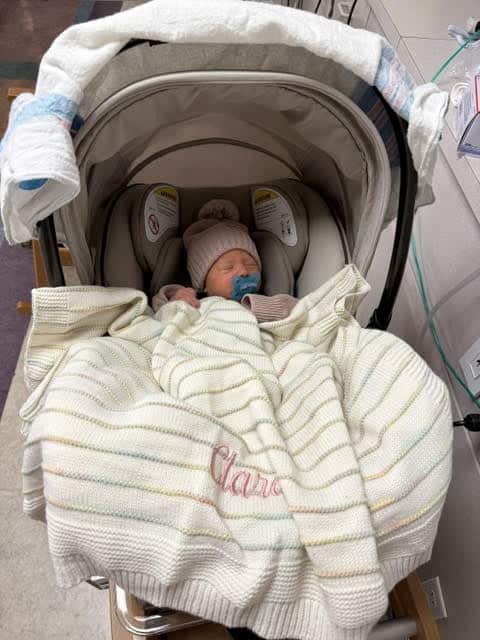
On Monday morning, after six days in the NICU, we finally buckled Clara into her car seat and headed home.
The transition felt surreal.
Just days earlier she had required CPAP, intubation, surfactant therapy, IV fluids, and continuous monitoring. Now we were driving home with our baby girl.
The emotions were overwhelming; gratitude, relief, exhaustion, and joy all wrapped together.
What the NICU Taught Me
Looking back, our NICU stay taught me so much about resilience, both Clara’s and our own.
It reminded me not to take ordinary parenting moments for granted. Holding your baby, changing a diaper, hearing them cry, or watching them nurse can feel routine until those experiences are temporarily taken away.
It reinforced the incredible value of breast milk, skin-to-skin contact, and parental presence, even when babies are medically fragile.
Most of all, it deepened my appreciation for the NICU nurses, physicians, respiratory therapists, lactation consultants, and countless healthcare professionals who care for these tiny patients every day.
If you’re currently walking through a NICU stay, please know that you are not alone. The days can feel long, and the uncertainty can feel overwhelming. But your presence matters. Your love matters. And even on the hardest days, you are exactly the parent your baby needs.
Today, Clara is thriving, and I am endlessly grateful for the team that helped bring her safely home. Our NICU stay was not part of our plan, but it reminded me just how strong these tiny babies, and their parents, can be.
Want more? My course is a 100% evidence-based approach to starting solids in a way that encourages a healthy dietary pattern from the start.
Check out the Starting Solids 101 Course now!

Cinthia Scott is a Registered Dietitian (RD) and International Board Certified Lactation Consultant (IBCLC) with over 10 years experience in the field of dietetics. Cinthia focuses on ensuring optimal nutrition in the first 1000 days of life to ensure optimal growth and development as well as set the stage for long-term health. Cindy is an author, starting solids expert, and advocate for caregivers receiving evidence based education and support surrounding breastfeeding and starting solids.
Cinthia is co-author of the 101beforeone Starting Solids Book, “101beforeone -baby-led feeding cookbook,” and is the founder and owner of The Baby Dietitian LLC which is her private practice built to provide virtual 1:1 services for caregivers surrounding infant nutrition, toddler nutrition, and breastfeeding support. Cinthia is also the creator of the Starting Solids 101 Program which provides caregivers 1:1 support from a Pediatric Dietitian on how to provide optimal nutrition from the start and create healthy eating habits that will last their whole lifetime. To work with Cinthia, you can access her services here.
Cinthia provides tons of free information for parents on her social media accounts as well.
- Instagram: @The.Baby.Dietitian
- Tiktok: @The.Baby.Dietitian